
Thoughtful technology practices help private clubs protect member information and maintain trust.
By Fritz Baldauf
Private clubs depend on digital systems for member information, payments, reservations, communications, and daily operations. Protecting those systems is part of protecting the trust members place in the club. Managers and boards can make cybersecurity more manageable by treating it as an ongoing operating responsibility.
Clubspot connects club workflows across areas such as membership, billing, reservations, events, and point of sale. As clubs review their technology environment, they should know which systems hold important information, who is responsible for them, and how those systems connect.
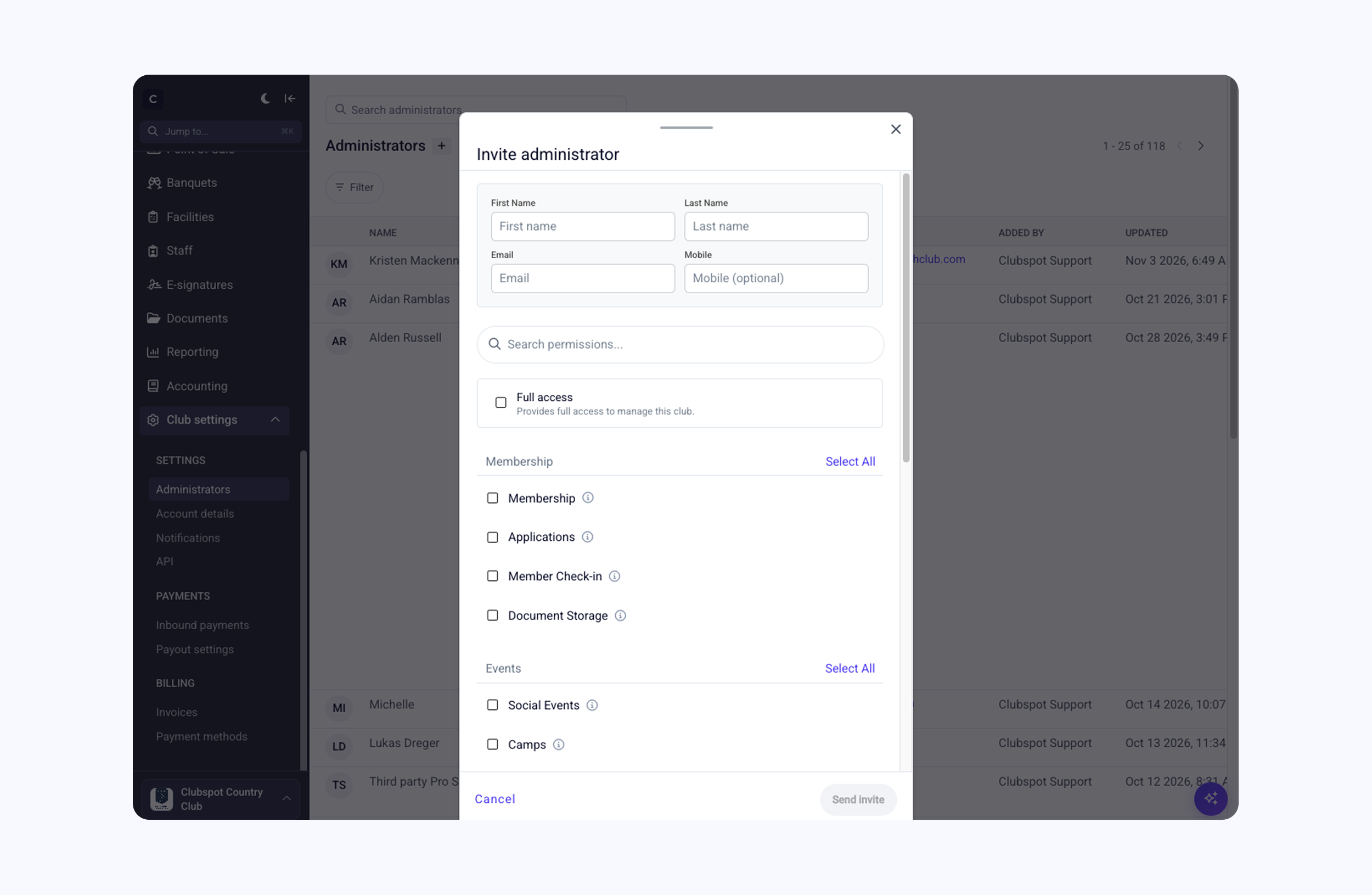
Start by reviewing user access. Staff should have the permissions they need for their roles, and access should be updated when responsibilities change or employees leave. Multi-factor authentication adds another layer of protection to important accounts, particularly those with administrative access.
Keep software and devices current. Clubs should know who tracks updates for computers, networks, and other systems, and how employees should report a device or account that may be at risk. Clear responsibility helps routine maintenance become part of normal operations.
Backups are useful only if the club can restore information when needed. Identify which records and configurations are critical, confirm that backups are being completed, and periodically test the recovery process. Include the steps for restoring essential services in the club’s continuity planning.
Employees also need to know how to recognize and report suspicious activity. Regular guidance can help staff pause before opening unexpected links or sharing information, and give them a clear way to alert the right person. A simple reporting process helps the club respond sooner when something seems wrong.
Review the club’s technology providers and connections. Understand what information each provider handles, who can access it, how to report a concern, and what responsibilities the club and provider each have. Keep an up-to-date list of systems and support contacts where responsible staff can find it.
Finally, agree on how the club will respond to a cybersecurity incident. Identify who makes decisions, who contacts providers, how employees should report issues, and how the club will restore operations. Review the plan with relevant staff and update it as systems and responsibilities change.
Cybersecurity does not depend on one tool or a single annual review. Clear ownership, careful access practices, current systems, tested backups, staff awareness, and a response plan give clubs a practical foundation for managing risk. Want to learn more about how Clubspot can improve your club’s cybersecurity? Book a demo today.
