
Private Club Website Builders: What Clubs Should Look For
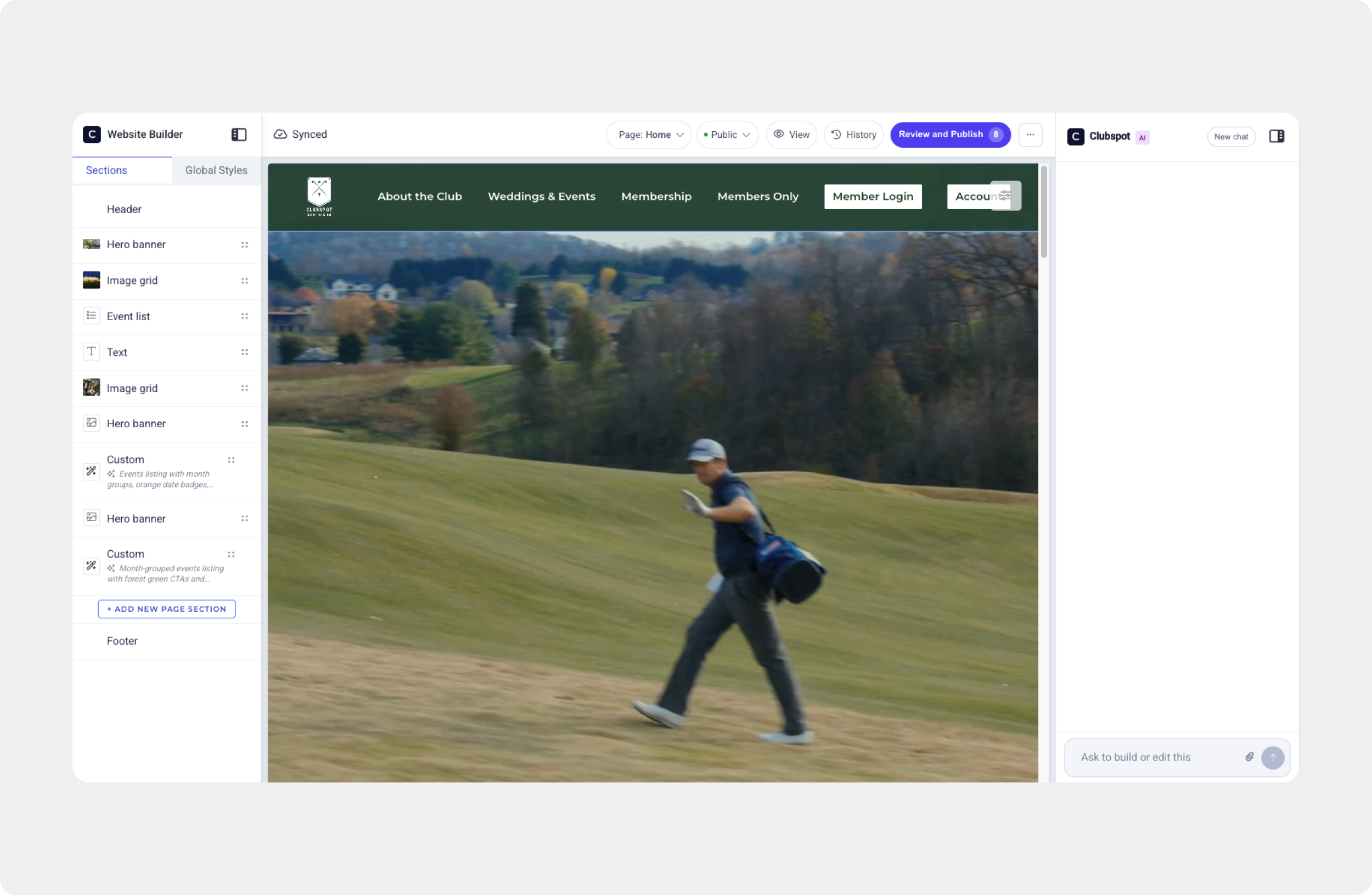
A modern web builder should allow club staff to easily and seamlessly update their website without needing developer help.
By Fritz Baldauf
A private club website is no longer simply a digital brochure. It is often the first place prospective members learn about the club, the main communications hub for current members, and the entrance to reservations, events, billing, documents, and other everyday services. The quality of that experience shapes how modern and accessible the club feels before someone ever arrives on the property. Choosing the right private club website builder therefore affects much more than appearance.
Club staff should be able to keep the website current without depending on a developer for every routine change. Updating dining information, promoting an upcoming event, creating a seasonal page, or replacing an image should not require a lengthy development cycle. An intuitive editor gives communications and membership teams greater control while allowing the website to keep pace with daily club activity. Flexible layouts and branding tools should also help the club maintain a polished identity without forcing every page into the same generic template.
Mobile responsiveness is equally important because members increasingly interact with the club from wherever they happen to be. Pages, menus, calendars, forms, and member tools should remain clear and easy to use across phones, tablets, and desktop computers. Staff should not have to maintain separate versions of the same content for different devices. Clubspot combines a customizable club website, member portal, and branded mobile apps within the same cloud-based platform, giving members connected access from any device.
Clubs should also evaluate what happens after a member clicks beyond the website’s public pages. A polished homepage has limited value if members are redirected into disconnected systems with different logins, designs, and information. The website should connect naturally with event registration, reservations, statements, payments, profile management, documents, and club communications. Clubspot’s website and member experience are tied directly to the operational platform, allowing members to manage more of their relationship with the club through one connected digital destination.
Strong publishing controls help clubs move quickly without sacrificing oversight. Staff may need to review a redesign, confirm updated information, or compare proposed changes with the live website before publishing. Version history and restoration tools can also provide confidence when several employees contribute to the site. Clubspot’s Review and Publish workflow gives administrators a side-by-side view of draft and live pages, while its history tools support previews, discarded drafts, and restoration of a previous version.
Artificial intelligence is beginning to change what clubs should expect from a website builder as well. Staff can now move from an idea, written prompt, uploaded image, or outside design reference to a polished page more quickly, reducing the need for custom development during every creative update. Clubspot AI can create and edit native website components, reorganize pages, refine styling, and help build complete page directions directly within the platform. The purpose is not to remove staff from the creative process, but to give them a faster and more flexible way to bring their ideas online.
The best private club website builder should combine creative control with a direct connection to the rest of the club. It should help staff communicate quickly, protect the club’s brand, and give members an intuitive path into the services they use every day. Clubspot approaches the website as part of the complete member and operational experience rather than as a separate marketing tool.
Book a demo to see how Clubspot can bring your club’s website, member portal, mobile apps, and daily workflows together in one modern platform.
