
The technology a club chooses shapes how its teams work together and how members experience the club.
By Fritz Baldauf
Technology used to be treated as an operational choice: a department needed a tool, the club selected one, and staff learned how to use it. That approach is harder to sustain as software shapes more and more of the member experience, staff workload, financial visibility, and daily coordination across a club. Technology decisions now touch the same priorities that occupy club leadership and boards.
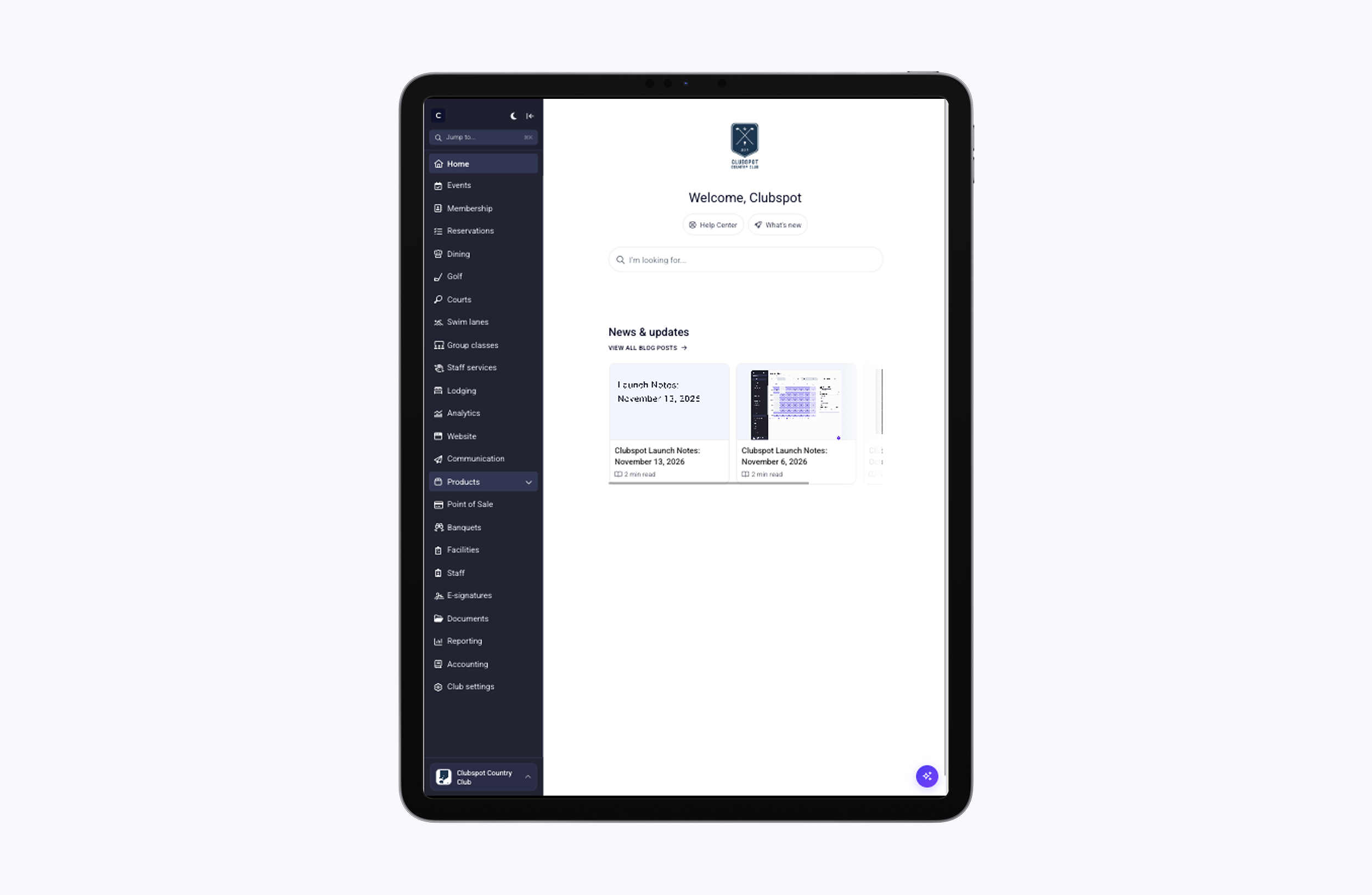
Clubspot brings many of those workflows into one connected platform, from membership and billing to dining, reservations, events, accounting, and member communications. For club leaders, the broader question is how technology supports the kind of club they are trying to run, and whether it gives teams the information and tools to deliver that experience consistently.
A useful starting point is the club’s strategy, not a product list. What service standards matter most to members? Which parts of the operation create the most friction for staff? Where does leadership need clearer information to make decisions? These questions help clubs distinguish between a technology investment that supports a real priority and one that simply adds another system to manage.
The answers will differ by club. One may need better visibility into activity across amenities; another may be working to reduce repetitive administrative tasks or make financial information easier to review. A board does not need to choose software settings or manage implementation details, but it can help establish the outcomes that an investment should support and ask how the club will assess progress.
That conversation benefits from input across departments. General managers, finance leaders, and department heads see different parts of the operation, from member participation and service needs to reporting and day-to-day tasks. Bringing those perspectives together can reveal where disconnected processes are affecting the club and which improvements would have the greatest practical value.
Clubs should also consider what happens after a decision is made. Staff need time to learn new workflows, members may need guidance as digital services change, and leaders need a way to monitor adoption and address problems. Planning for training, communication, data access, and ongoing support makes technology part of an operational plan rather than a one-time purchase.
As clubs balance service expectations, staffing, operating costs, and long-term investment, technology deserves a place in strategic planning. The goal is not to adopt every new tool. It is to choose systems that help the club make informed decisions, coordinate its operation, and protect the member experience it intends to provide.
