
A clearer financial picture starts when club transactions stay connected to the activity behind them.
By Fritz Baldauf
A private club’s financial activity rarely begins in the accounting office. It begins when a member orders dinner, registers for an event, books a room, pays dues, purchases something from the golf shop, or adds a guest to a reservation. Each transaction already carries important context about the member, department, service, and reason for the charge. Club accounting becomes more efficient when that information remains attached from the moment the activity occurs.
When operational systems and accounting software are disconnected, finance teams must recreate that context later. Staff may need to export transactions, assign codes, compare totals, and investigate whether every charge reached the correct account. The general ledger eventually reflects what happened, but only after employees reconstruct activity from around the property. That process adds work while creating more opportunities for inconsistent or incomplete information.
Clubspot connects billing, payment collection, reconciliation, and accounting visibility within one financial flow. Automated billing and instant posting allow activity to enter the club’s financial workflows without waiting for a separate batch process or manual transfer. Transactions can remain connected to the member and operational activity that created them. Controllers gain a more current view of the club instead of receiving information only after another department prepares an export.
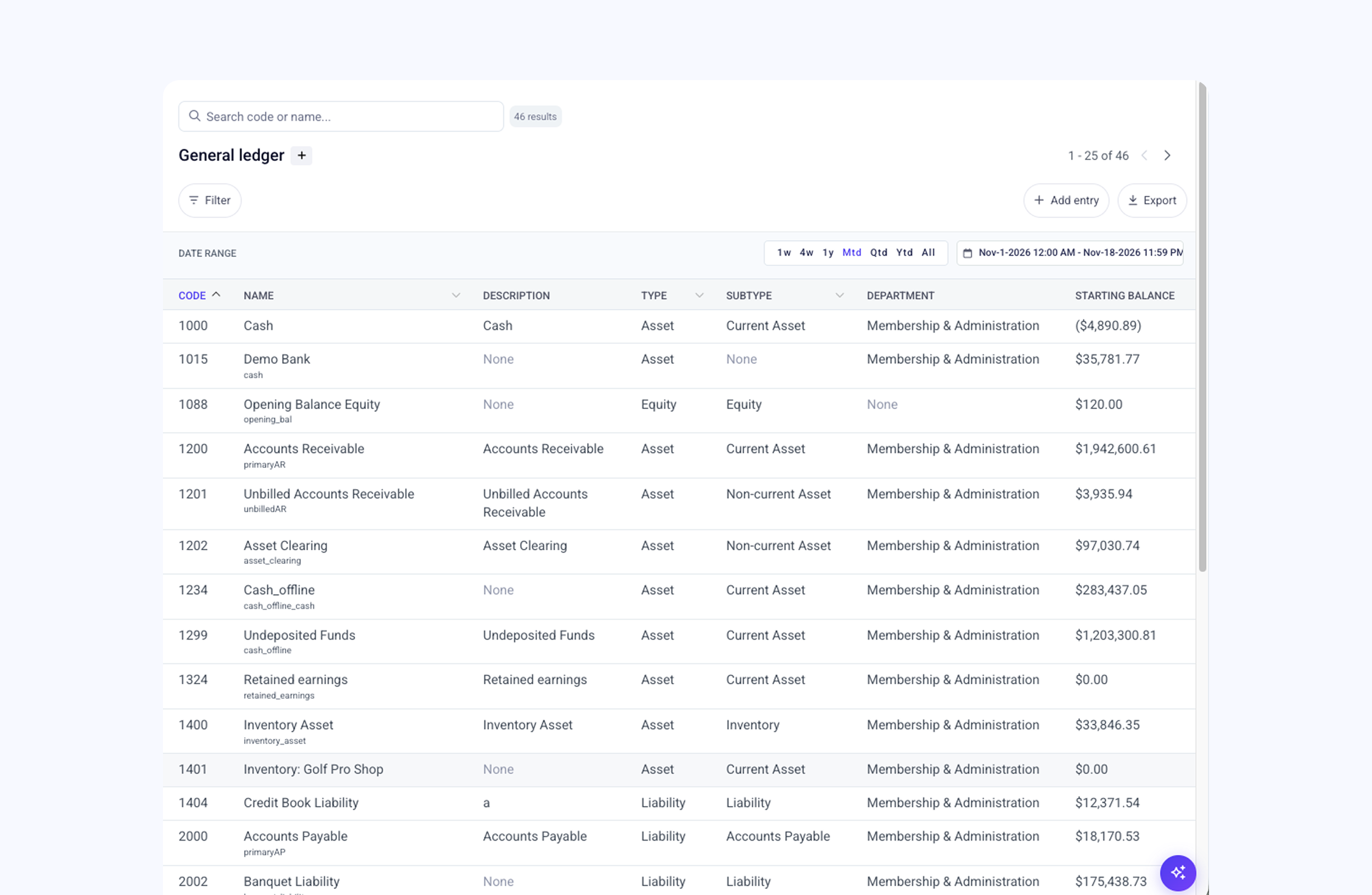
For clubs that want one all-in-one system, Clubspot provides a native accounting suite for managing accounts receivable, accounts payable, and the full general ledger directly within the platform. That structure keeps the books close to the dining, membership, event, reservation, payment, and other workflows generating financial activity. Finance teams can spend less time moving information between tools and more time reviewing accounts, maintaining controls, and understanding performance. The month-end close becomes the continuation of an organized daily process rather than an effort to rebuild the month.
A connected approach does not require every club to adopt the same accounting structure. Some finance teams prefer to retain an external platform they already know and trust. Clubspot can automatically synchronize journal entries with QuickBooks Online or NetSuite, while supporting journal-entry exports for other accounting systems. Clubs can therefore modernize the flow of operational data while choosing whether to manage the full general ledger inside Clubspot or through an outside accounting package.
Beginning accounting where activity happens also creates clearer information for the rest of the organization. Department leaders can better understand the financial effect of daily operations, while controllers receive a more dependable path from the original transaction through billing, payment, reconciliation, and reporting. Members benefit when charges and payments reach their accounts accurately and promptly. One connected financial flow supports stronger internal controls without separating finance from the club experience it records.
The future of private club accounting will not be built around collecting disconnected summaries after the work is complete. It will be built around operational and financial systems that preserve the context of every transaction from the beginning. Clubspot supports that future with native accounting, connected billing and payments, and the flexibility to synchronize with established external platforms. Book a demo to see how Clubspot can create a more connected financial foundation for your club.
