
How Private Clubs Manage Dining Reservations
By Fritz Baldauf
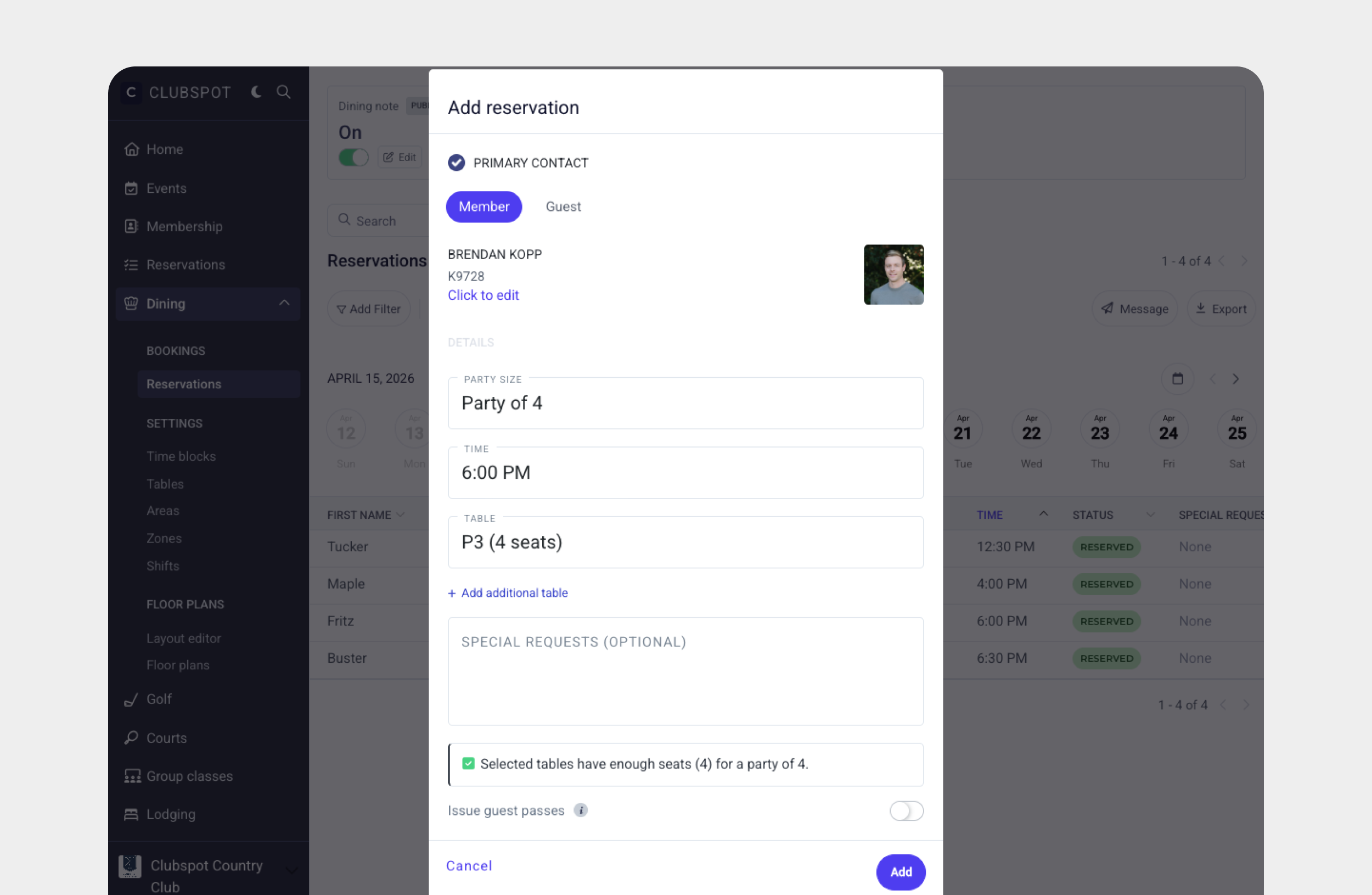
Making a dining reservation at a private club in 2026 should be just as easy as it is to make a reservation at a restaurant.
Dining is one of the most active and visible parts of a country club’s daily operations. From casual weeknight dinners to large member events, clubs often manage hundreds of reservations each week while coordinating seating, staffing, and service across multiple dining spaces. Because of this complexity, most clubs rely on specialized software to manage dining reservations and restaurant operations.
Historically, many clubs handled reservations through a combination of phone calls, handwritten lists, and disconnected software systems. While these approaches worked for smaller operations, they often created unnecessary administrative work and limited visibility into table availability or guest activity. Ann Arbor City Club experienced this firsthand before modernizing its technology. General Manager Jaime Deal described how reservations were handled previously:
“All of our reservations and sign-ups were done the old fashioned way by either email or calling the front desk.”
As clubs have grown and member expectations have changed, many organizations have moved toward integrated club management platforms that include dining reservations as part of a broader operational system. Clubspot is one example of this approach. The platform allows clubs to manage dining reservations alongside membership data, billing, POS activity, and events in a single system, helping staff see a complete picture of member activity across the club.
For staff working on the dining side, this integration can make day-to-day operations much easier. Instead of juggling multiple programs, teams can view reservations, track table availability, and manage seating from a unified interface. At Tahoe Yacht Club, the shift toward integrated systems also simplified event and dining coordination. Director of Communications Taylor Redfern explained how previous tools created unnecessary administrative work:
“Previously, members RSVP’d to social events through Google Forms in our newsletter. That created a spreadsheet that staff then had to manually manage.”
By consolidating these workflows, clubs can manage reservations, event attendance, and dining activity from the same environment, reducing manual work and making it easier to adjust reservations as plans change.
Modern dining reservation tools also improve the experience for members. Instead of calling the front desk or waiting for confirmation emails, members can reserve tables, adjust reservations, or join event guest lists directly through the club’s website or mobile app. These self-service tools reduce staff workload while giving members a faster and more convenient way to interact with the club.
As private clubs continue modernizing their operations, dining reservations are increasingly becoming part of a broader digital ecosystem. Platforms like Clubspot connect dining with membership records, event registrations, billing, and communication tools so that every interaction with the club feels seamless. For many clubs, this shift helps staff manage busy dining operations more efficiently while giving members the modern hospitality experience they expect.
Want to see what Clubspot can do for your club’s dining operation? Book a demo today.
